Warrior Flow: Where Chan Meets Martial Practice
武者之流
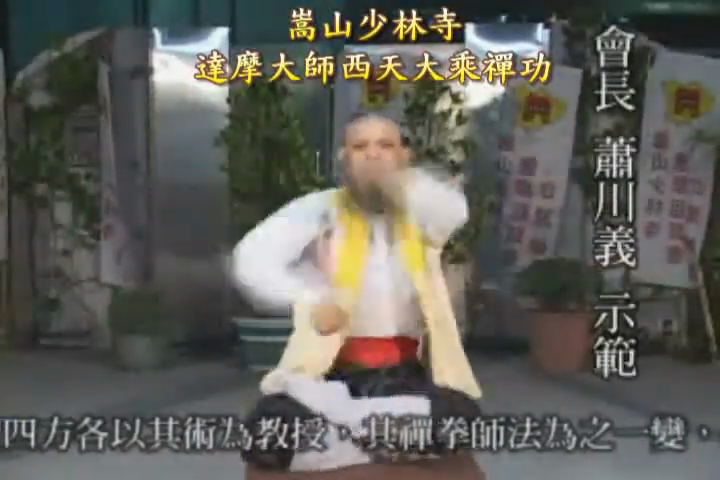
Zen Gong contains a section of dynamic Zen boxing. Why a meditation curriculum keeps strikes in it at all, and what changes when you practise them.
The Zen Gong sequence contains a section of dynamic Zen boxing. A meditation curriculum with strikes in it looks like a contradiction until you look at what the strikes are for.
Chan and fist as one禪拳合一
- 禪chán
- Chan, meditative absorptionFrom Sanskrit dhyāna. Read zen in Japanese.
- 拳quán
- Fist, boxingAlso used for a martial system generally — as in 太極拳.
- 合一hé yī
- United as oneNot "combined". The claim is that they are not two things.
The phrase is a standard formulation in Shaolin material and it is a stronger claim than it first appears. It does not say that monks meditated and also fought. It says the two activities are the same activity, performed with different externals.
What the history supports
Shaolin's martial reputation is well attested from the Ming dynasty onward, including accounts of monastic fighters engaged in military service. That much is solid documentary history.
What is not supported is the popular origin story in which Bodhidharma taught fighting to weakened monks. As discussed in Bodhidharma and the Western Heaven, that account appears very late and the associated texts are dated well after his supposed lifetime. Shaolin's martial tradition is real; its founding myth is a myth.
Why a meditation set contains strikes
The interesting question is not historical but practical: what does the martial section do that the other thirteen movements do not?
- It tests the structure under speed. Alignment that survives a slow movement may collapse in a fast one. A strike is the most demanding available test of whether the stance and spine are actually connected.
- It requires whole-body coordination. A correctly generated strike originates at the foot, transmits through the leg and waist, and arrives at the hand. Any break in the chain is immediately obvious.
- It trains intent. 意 — directed intention — is abstract in a standing hold and unambiguous in a strike. There is a target; either the intent goes there or it does not.
- It produces arousal to work with. The set deliberately raises intensity and then returns to stillness. Learning to settle from an activated state is a different skill from staying settled, and arguably a more useful one.
That last point is what makes the sequence's architecture coherent. Movements one to four are seated and internal; the middle section builds through expansion into dynamic work; movements thirteen and fourteen return to stillness. The martial section exists so that there is something to come back down from.
How to practise it
- 01Learn it slowly first
Full speed before the path is grooved produces a movement powered by the shoulder alone. Weeks of slow repetition come first.
- 02Generate from the ground
The movement begins with pressure into the back foot, travels through the leg, turns at the waist, and arrives last at the hand. If your shoulder initiates it, the chain is broken.
- 03Stay loose until the end
The arm travels relaxed and tightens only at full extension. Tension held throughout slows the movement and loads the elbow.
- 04Never lock the elbow
Full extension is not hyperextension. Striking into empty air with a locked elbow is a reliable way to injure it.
- 05Breathe out on the strike
Exhalation accompanies the extension. Holding the breath is the most common error here, as elsewhere — see Breathing in Qigong.
- 06Return to stillness deliberately
Movements thirteen and fourteen are not an afterthought. Coming down is the part of this section that is actually being trained.
What this is not
It is worth being unambiguous. Nothing in the app teaches self-defence, and practising movement twelve does not make anyone able to fight. Martial ability comes from training against a resisting opponent, and no solo form in any tradition substitutes for that.
The martial content here is a training method for coordination, structure and intent. It happens to be shaped like a strike because that shape tests those qualities better than anything else available. Treating it as combat preparation would be a category error, and a dangerous one.