Xuán Dǐng (懸頂): The Suspended Crown, Explained
懸頂
One instruction governs the spine in every seated and standing form in the curriculum. It is also the one most often taught badly in English.
One instruction governs the spine in every seated and standing posture in the curriculum. It is also the instruction most often mistranslated into English, usually as something that makes people lift their chin and tighten their neck.
The term懸頂
- 懸xuán
- To hang, to suspendSpecifically hanging from something above. The same character is used for a hanging scroll or a suspended bell.
- 頂dǐng
- Crown, summit, topThe top of the head. Also the peak of a mountain.
- 百會bǎi huì
- Hundred MeetingsThe point at the crown of the skull, roughly where the lines from the ear apexes and the midline intersect. The anchor point for the suspension.
- 沉肩chén jiān
- Sinking the shouldersThe instruction that pairs with 懸頂. If the crown lifts and the shoulders do not drop, the neck tightens.
Related formulations appear across the internal arts — 虛靈頂勁 ("empty spirit, energy at the crown") in tai chi classics, among others. The physical instruction is essentially the same in each.
What goes wrong in English
Common renderings — "lift the head", "raise the crown", "press up through the top of the skull" — all describe an upward push. That is the opposite of what the character says, and the results are visible immediately.
- Pushing up from below shortens the back of the neck, compressing exactly the segment the instruction is meant to decompress.
- It usually lifts the chin, which tilts the head back and puts the eye-line above horizontal.
- It recruits the upper trapezius, so the shoulders rise — directly contradicting 沉肩.
- And it cannot be sustained, because it is muscular work. Correct alignment is not tiring.
Finding it
- 01Locate the point · 百會
Run a finger up from the apex of each ear toward the top of the skull, and another back along the midline from between the eyebrows. Where they meet is roughly 百會. You do not need anatomical precision — you need a consistent reference.
- 02Imagine the thread
A single fine thread attached at that point, running straight up. Not forward, not back. Straight up, perpendicular to the floor.
- 03Let it take the weight
Rather than lifting, allow the head to hang from the thread. The sensation is of the skull floating slightly and the neck lengthening from underneath it. Nothing should feel like it is working.
- 04Drop the shoulders · 沉肩
Let the shoulders sink two centimetres. Not pulled back, not squeezed together — dropped, as if the arms were slightly too heavy. The armpits stay hollow, as though a small egg sat in each.
- 05Check the chin
The chin should have tucked very slightly of its own accord — a few millimetres, not a deliberate nod. The eye-line ends up level or a little below.
- 06Soften everything else
Jaw unclenched, tongue resting lightly at the roof of the mouth, breath uninterrupted. If the breath changed when you set the posture, something is gripping.
How to know you have it
| Check | Correct | Incorrect |
|---|---|---|
| Effort | None detectable | Sustained work at the neck or shoulders |
| Back of neck | Feels longer, more open | Feels compressed or pinched |
| Chin | Slightly tucked, unforced | Lifted, or deliberately pulled in hard |
| Shoulders | Dropped, armpits hollow | Raised toward the ears |
| Breath | Unchanged, quiet | Shallower, or held |
| After two minutes | More comfortable than at the start | Aching — you are holding, not hanging |
Why it comes first
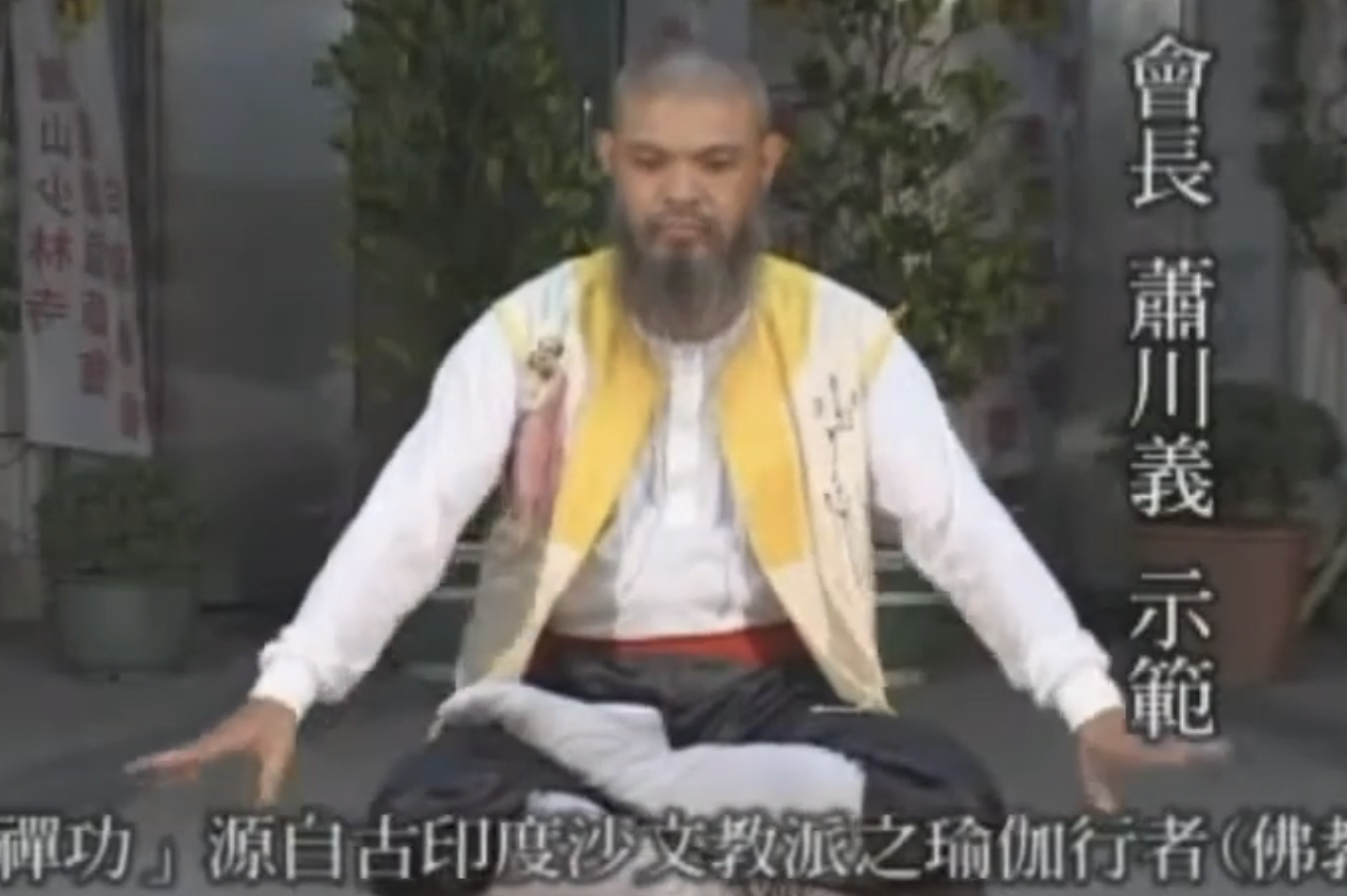
In the curriculum, 懸頂 appears in the very first movement, before any instruction about breath or hands. That ordering is deliberate. The lineage note for the opening posture describes the crown suspension aligning the entire spine down to the perineum without muscular effort — and everything after it inherits that alignment.
Practically: a compressed cervical spine restricts the breath, and a collapsed posture makes deep abdominal breathing mechanically harder. Get the spine wrong and the breathing work is fighting you the whole way.