Meditation vs Movement Meditation: What Changes
動靜之間
If sitting still has never worked for you, the problem may be the stillness rather than the meditation. What moving changes about the task.
If sitting still has never worked for you, the problem may be the stillness rather than the meditation. Moving changes what the task actually is — in ways worth being precise about.
The same underlying task
Strip both practices back and the instruction is identical: place attention somewhere, and when you notice it has wandered, return it. Everything else — the posture, the breath, the movement — is scaffolding around that one act.
What differs is how much scaffolding there is, and what happens when it is removed.
- 靜功jìng gōng
- Still workPractices done without external movement — seated and standing meditation.
- 動功dòng gōng
- Moving workPractices with external movement. Most qigong sets are 動功.
- 調心tiáo xīn
- Regulating the mindThe third of the three regulations, and the component both practices share. See What Is Qigong?
What movement supplies
In seated meditation the usual anchor is the breath, which is subtle, unchanging and easy to lose. In movement practice the anchor is the movement itself, which is coarse, continuously changing, and comparatively hard to lose track of.
- Continuous novelty. The next movement is always arriving, so there is less unoccupied attention to drift with.
- Proprioceptive load. Balancing, tracking a knee, holding a hand shape all require attention as a matter of mechanics, not discipline.
- Built-in error signal. If your attention leaves, the movement degrades and you can feel it. Seated practice has no equivalent feedback.
- Physical fatigue as a floor. A standing hold at ninety seconds produces sensation you cannot ignore, which keeps you present by force.
That is why people who have bounced off seated practice several times often get on with qigong immediately. It is not that they lacked discipline; the task was harder than it looked.
What movement costs
The same scaffolding that makes it accessible limits how far it goes on its own.
| Seated 靜功 | Moving 動功 | |
|---|---|---|
| Anchor | Subtle, internal | Coarse, external |
| Ease of starting | Hard | Easier |
| Characteristic failure | Drowsiness, drifting | Autopilot — performing without attending |
| Feedback when attention leaves | None | Movement degrades noticeably |
| Physical demand | Low, but sitting is uncomfortable | Moderate |
| Depth available | Very high | Moderate on its own |
Autopilot is the real hazard, and it is insidious precisely because the session looks fine from outside. Someone can perform a set for years, accurately, while thinking about something else the entire time — and get most of the physical benefit and almost none of the rest.
Why the sequence brackets itself with stillness
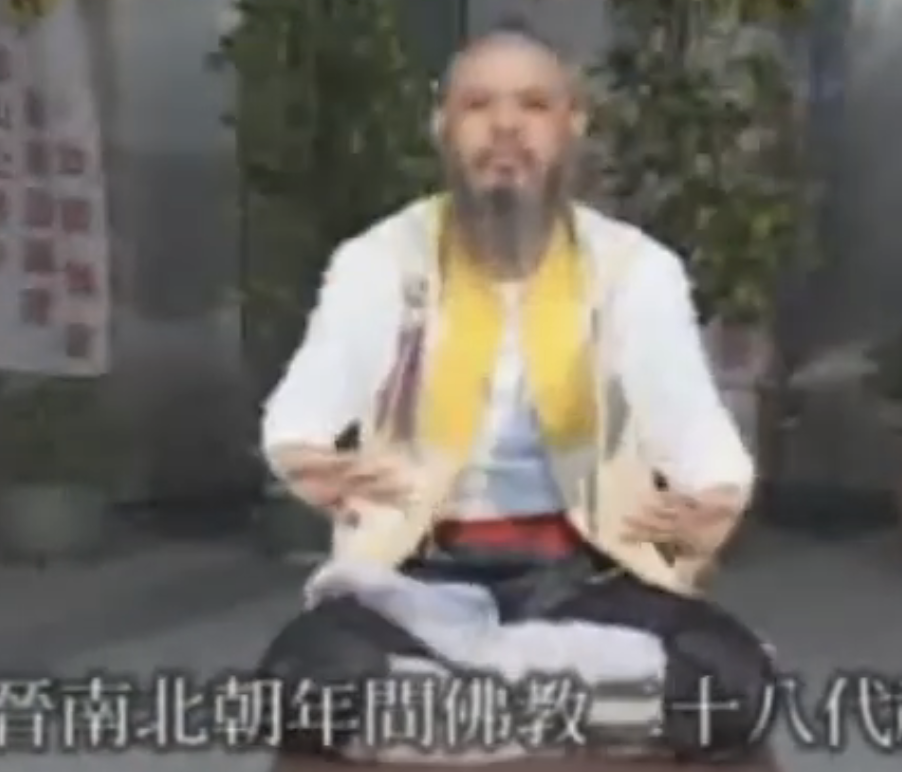
Western Heaven Zen Gong opens with 坐禪入定, seated meditation, and closes with 靜坐圓滿, final seated stillness. Twelve moving movements sit between them.
This is a deliberate structure and it does something specific. The opening establishes the attentional register — you are not going to be reading email during the next eight minutes — before any movement begins. The closing removes the scaffolding while the attention is still gathered, which is a substantially easier place to sit than cold.
Sitting for two minutes at the end of a moving set is a different experience from sitting for two minutes having just got off a train. The set has done the difficult part.
Choosing, and combining
- If you have never meditated: start with movement. The entry cost is lower and the early feedback is better.
- If sitting makes you drowsy: movement, or standing. Drowsiness is a posture problem as much as an attention problem.
- If you are physically restless: movement, and use the standing hold as the bridge to stillness.
- If you already sit and want more: add a short moving set beforehand. It makes the sit easier.
- If you have chronic pain that makes sitting hard: movement practice is often more accessible, and standing work can be modified extensively.
A reasonable combined shape: six to eight minutes of a moving set, then two to five minutes seated, without a break between them. That is what the Zen Gong sequence is already doing, and it is a sensible template even if you practise something else.